 Marindec Paints
Guides / Application guide
Film Thickness Measurement
Why film thickness matters, how to measure wet and dry film thickness, and what to do when readings are out of range.
Why film thickness matters
Applying a coating within its target DFT range is as important as correct surface preparation. Coating outside the target range causes predictable failures:
| Failure type | Cause | Result |
|---|---|---|
| Pinhole rusting | DFT too low — substrate profile peaks through the film | Localised electrochemical corrosion at exposed peaks |
| Britling | Primer applied below target DFT | Poor intercoat adhesion; topcoat flexibility lost |
| Sagging / running | DFT too high — viscosity and gravity conflict | Inconsistent film, uneven protection |
| Stress cracking | Epoxy applied above target DFT | Residual stress exceeds adhesion strength — cohesive fracture |
| Wrinkling | Alkyd topcoat too thick | Topcoat skins before undercoat — relative motion causes surface distortion |
A 0.5mm variance in wet film thickness can change the final DFT by 32–50% of the target value.
Measuring Wet Film Thickness (WFT)
Measure WFT immediately after application, before any drying occurs.
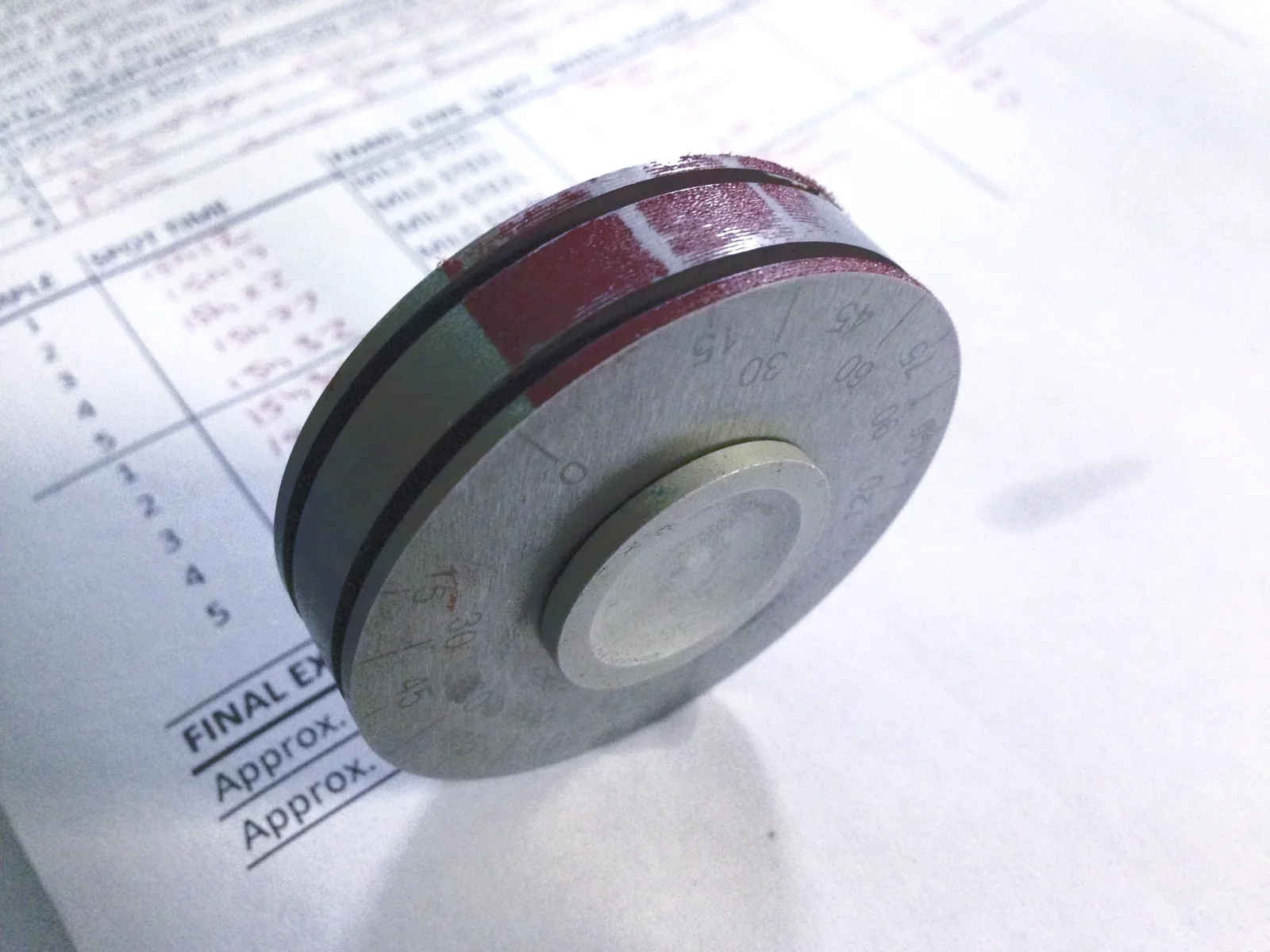
| Tool | Tolerance | Method |
|---|---|---|
| Comb gauge | ±5% | Press into wet film; highest notch that contacts the film indicates WFT |
| Wheel gauge | ±2.5% (+1μm) | Roll across wet film; eccentric edge marks WFT at touch-dry point |
Notes:
- Clean gauges with solvent immediately after each reading
- Wheel gauge: inspect eccentric surface for chips before use — chips cause skip marks and inaccurate readings
- Apply at 3 or more random points per panel/area to capture thickness variation
Measuring Dry Film Thickness (DFT)
Use an ELCOMETER (or equivalent electromagnetic gauge) on ferrous substrates after full cure.
- Calibrate against manufacturer shims before use — confirm calibration at start and end of each measurement session
- Take readings at a minimum of 3 random points per surface area
- Record the mean and range; both minimum and maximum readings matter
WFT to DFT calculation
To estimate DFT from a WFT reading:
```
DFT = WFT × (NVC% ÷ 100)
```
NVC% = Non-Volatile Content by volume — available from the product TDS.
Example: Product with 50% NVC applied at 100μm WFT → estimated DFT = 50μm
To work backwards (target DFT → required WFT):
```
WFT required = Target DFT ÷ (NVC% ÷ 100)
```
Example: Target DFT 60μm, NVC 50% → apply at WFT = 120μm
If film thickness is out of range
| Situation | Action |
|---|---|
| DFT below minimum | Apply an additional coat once the existing film has cured to the minimum recoat window |
| DFT above maximum | Do not apply additional coats; allow full cure; consult TDS or contact Marindec technical support |
*For product-specific DFT ranges, recoat windows, and dilution rates, refer to the Technical Data Sheet (TDS) for each Marindec product.*
Working on a project like this? Request a quote — same-day turnaround on most requests.